Introduction
There’s a moment that many people experience during meditation, especially in the beginning. You sit down, close your eyes, and try to focus… but your mind refuses to cooperate. Thoughts jump from one thing to another. You remember conversations, worries, random memories. And after a few minutes, you feel like nothing is working.
I remember going through this exact phase. I used to believe meditation meant complete silence in the mind. When that didn’t happen, I assumed I was doing it wrong. But then something changed—not through technique, but through a simple line I read before sitting down:
“In the stillness of the mind, the wisdom of the soul emerges.”
That line stayed with me. When I sat in silence again, I wasn’t trying to “force quiet.” I was observing. Listening. Allowing. And slowly, meditation started to feel different.
This is where spiritual quotes in meditation become powerful. They don’t replace meditation. They guide it. They give your mind a direction without forcing control. They create a bridge between thinking and awareness.
In a world where meditation is often misunderstood or practiced mechanically, quotes add meaning, depth, and emotional connection. They help you not just sit—but truly reflect.
Quick Answer (Featured Snippet)
Spiritual quotes enhance meditation by giving the mind a meaningful focus, helping deepen awareness and emotional reflection. Instead of forcing silence, you gently anchor your attention to a quote, reflect on its meaning, and allow insights to emerge naturally. This approach improves focus, emotional clarity, and spiritual connection over time.
What Makes Spiritual Quotes Effective in Meditation
They Provide a Gentle Anchor for the Mind
One of the biggest challenges in meditation is distraction. The mind is naturally active, constantly producing thoughts. Trying to stop it often creates frustration.
This is where spiritual quotes act as an anchor. Instead of focusing on emptiness, you focus on meaning. A quote becomes a point of awareness—not something to analyze, but something to sit with.
For example, reflecting on a line like:
“The soul is a sanctuary, a place of refuge from the chaos of the world.”
naturally draws your attention inward. It shifts your focus from external noise to inner space.
Unlike rigid concentration, this method feels softer and more natural. You are not controlling the mind—you are guiding it gently.
They Activate Reflection Instead of Suppression
Many people misunderstand meditation as suppressing thoughts. In reality, meditation is about observing thoughts without attachment.
Spiritual quotes support this process by encouraging reflection rather than resistance. Instead of pushing thoughts away, you allow them to connect with the meaning of the quote.
For instance, when you reflect on:
“The path to inner peace is paved with forgiveness,”
your mind may bring up memories, emotions, or unresolved experiences. This is not distraction—it is awareness unfolding.
This is where meditation becomes transformative. You are not escaping your mind; you are understanding it.

How Spiritual Quotes Deepen Meditation Experience
They Create Emotional Connection
Meditation can sometimes feel mechanical, especially for beginners. Sitting in silence without emotional engagement may feel empty or difficult.
Spiritual quotes add emotional depth. They make the experience more personal. When a quote resonates with your current situation, it creates a natural connection between your inner state and your awareness.
For example, during a stressful period, reflecting on:
“In the depths of our being, we find the strength to overcome any obstacle,”
can shift your emotional state. It does not remove the challenge, but it changes how you relate to it.
They Encourage Inner Dialogue Without Noise
There is a difference between mental chatter and conscious reflection. Spiritual quotes help transform scattered thinking into focused inner dialogue.
Instead of random thoughts, your mind begins to explore meaningful questions:
- What does this quote mean for me?
- Where does this apply in my life?
- What am I holding onto that I need to release?
This type of reflection is not distraction—it is part of deep awareness.
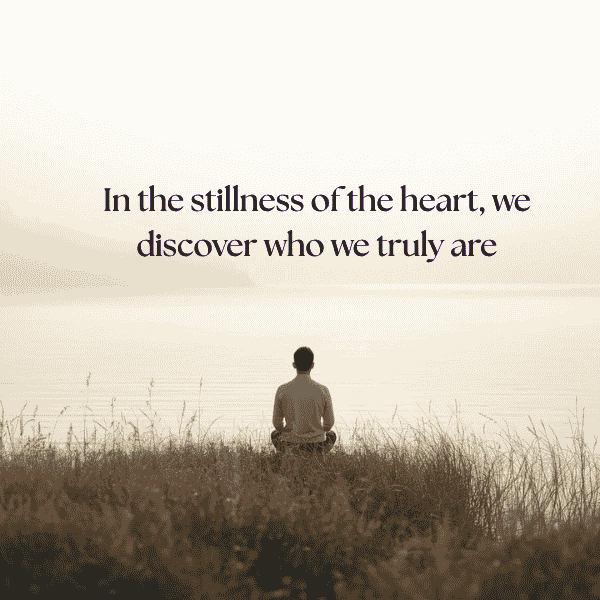
Spiritual Quotes vs Mantras: Understanding the Difference
Meaning vs Repetition
Mantras are traditionally repeated sounds or phrases designed to focus the mind. They work through rhythm and repetition.
Spiritual quotes, on the other hand, work through meaning and insight. They are not meant to be repeated mechanically, but to be understood and experienced.
Both approaches are effective, but they serve slightly different purposes:
- Mantras calm the mind through repetition
- Quotes deepen awareness through reflection
When to Use Quotes Instead of Mantras
Quotes are especially helpful when:
- You feel emotionally overwhelmed
- You are searching for clarity
- You want to understand your thoughts more deeply
In these moments, repetition alone may not be enough. You need meaning, and that is what quotes provide.
How to Use Spiritual Quotes During Meditation
Before Meditation: Setting Intention
Before you begin, choose a quote that resonates with you. Read it slowly. Let the words settle.
This step is important because it sets the tone for your meditation. Instead of sitting randomly, you are entering with a clear intention.
You can stay consistent with this practice using a
👉 daily routine planner for mindfulness and focus
During Meditation: Gentle Focus
As you sit in silence, bring the quote into your awareness. Do not force concentration. Simply return to it whenever your mind wanders.
Allow thoughts and feelings to arise naturally. Let them connect with the meaning of the quote. This creates a flow between awareness and reflection.
After Meditation: Integration
After your session, take a moment to reflect. What did you notice? What thoughts came up? Did anything shift?
Writing your reflections can deepen understanding. Using
👉 guided journal prompts for self reflection
can help you explore insights more clearly and build a habit of awareness.
The Psychological Impact of Using Quotes in Meditation
This approach is not only spiritual—it is also supported by psychology. Research shows that meaningful language can influence cognitive patterns and emotional responses.
When you engage with positive, reflective statements, your brain begins to form new neural connections. This process, known as neuroplasticity, allows you to reshape thought patterns over time.
Studies also suggest that reflective practices improve emotional regulation, reduce stress, and increase overall well-being. By combining meditation with meaningful quotes, you are enhancing both awareness and mental clarity.
Real-Life Example: A Shift in Perspective
There was a period when I felt mentally overwhelmed. I was constantly thinking about the future, trying to control outcomes, and feeling anxious when things didn’t go as planned.
During one meditation session, I focused on a simple line:
“The journey of spirituality is a journey of letting go and surrendering to the flow of life.”
At first, it felt abstract. But as I sat with it, I realized how much I was resisting uncertainty. I wanted everything to be predictable.
That session didn’t change my life instantly. But it changed my awareness. And over time, that awareness changed my behavior.
This is how transformation works. Not through force, but through understanding.
Common Mistakes When Using Quotes in Meditation
One common mistake is treating quotes as something to analyze intellectually. Meditation is not about overthinking the words. It is about experiencing them.
Another mistake is using too many quotes at once. This creates confusion instead of clarity. One quote, deeply understood, is enough.
Some people also expect immediate results. Like any practice, this takes time. Growth happens gradually.
Building a Consistent Practice with Quotes
Consistency matters more than perfection. You do not need long sessions. Even a few minutes of focused reflection can create meaningful change.
The key is to make it part of your routine. Over time, this practice becomes natural. You begin to carry awareness beyond meditation into daily life.
If you want to explore more deep spiritual quotes for inner peace and self-discovery, they can provide powerful anchors for your practice.
Connecting This Practice with Your Spiritual Journey
Spiritual growth is not separate from daily life. It is reflected in how you think, feel, and respond to situations.
Quotes help bridge the gap between awareness and action. They remind you of deeper truths when you are caught in surface-level distractions.
If you are building your foundation, you can also explore
👉 meditation techniques for beginners and spiritual growth
to support this practice further.
Conclusion
Spiritual quotes do not replace meditation. They enrich it. They bring meaning into silence, turning passive sitting into active awareness.
Instead of fighting your thoughts, you begin to understand them. Instead of forcing calmness, you allow it to emerge naturally.
Over time, this practice changes more than your meditation sessions. It changes how you experience life. You become less reactive, more aware, and more connected to yourself.
In the end, meditation is not about escaping reality. It is about seeing it clearly. And sometimes, all it takes is a single line to guide you there.
FAQs
How do spiritual quotes improve meditation focus?
They provide a meaningful anchor for attention, making it easier to stay present without forcing mental silence.
Can beginners use quotes in meditation?
Yes, quotes are especially helpful for beginners because they give direction and reduce frustration during practice.
How many quotes should I use in one session?
One quote is enough. Focusing on a single idea allows deeper reflection and clarity.
Are quotes better than traditional meditation methods?
They are not better or worse, but different. Quotes add meaning, while traditional methods focus on silence or repetition.
Can this practice help with emotional healing?
Yes, reflecting on meaningful quotes can bring awareness to emotions and support healing over time.