Introduction
There are seasons in life when life appears normal on the outside, yet something within feels unsettled. Daily routines continue, tasks get completed, conversations happen, and responsibilities are handled, but deep inside there can still be a quiet feeling of disconnection. Many people experience this kind of inner distance. It does not always arrive through a dramatic life event. Sometimes it shows up in small, ordinary moments, like late-night reflection, emotional tiredness, or the subtle sense that something meaningful has been lost along the way.
That is where soul-deep spiritual quotes can become deeply valuable. A meaningful quote does more than sound beautiful. It can create stillness, awaken reflection, and help reveal what may have been buried under stress, comparison, fear, pressure, or emotional exhaustion. In that stillness, self-discovery begins. Not always in loud or life-changing ways at first, but often through one honest moment of inner recognition.
This topic matters because many people are not simply searching for more information. They are searching for clarity, inner peace, healing, and a stronger connection to who they truly are. Spiritual quotes support that process because they often give language to thoughts and feelings that are difficult to express. They can guide reflection, encourage mindfulness, support emotional healing, and remind the heart that growth often begins within.
Very often, long explanations and detailed advice do not reach the heart in the same way that one simple sentence can. A single quote about surrender, trust, purpose, silence, healing, or truth can remain in the mind all day and quietly change the way life is seen. That is the power of spiritual wisdom expressed in just a few words.
This article explores how soul-deep spiritual quotes for self-discovery can help readers reconnect with themselves, understand their inner world more clearly, and move through life with greater awareness. It also includes practical ways to use these quotes in journaling, meditation, reflection, and daily growth. For the broader foundation behind this topic, readers can begin with the pillar article on spiritual quotes for inner peace and healing, which explores how spiritual wisdom supports healing, purpose, peace, and deeper understanding.
Quick Answer
Soul-deep spiritual quotes for self-discovery help people understand their thoughts, emotions, values, and purpose by giving language to what the inner self may already be trying to reveal. One of the most effective ways to use them is to choose a meaningful quote, reflect on what it reveals about the current season of life, journal about it, and turn that insight into one small daily action. Over time, this practice can support mindfulness, emotional healing, inner growth, and a stronger sense of identity.
What Are Soul-Deep Spiritual Quotes?
The meaning behind soul-deep quotes
Not every spiritual quote carries the same depth. Some feel motivational, some feel comforting, and some feel calming. But soul-deep spiritual quotes often reach a more intimate place. They speak to identity, awareness, truth, surrender, healing, purpose, and the quiet relationship between outer life and inner reality.
A soul-deep quote often feels personal even when it was not written for one specific person. That is part of what makes it so powerful. It holds a universal truth, yet it lands in a very personal way. A line such as, “The answers sought outside often begin within,” may appear simple, but for someone who has spent months doubting their instincts, it can feel profound. It redirects attention away from constant outside validation and back toward inner wisdom.
These quotes matter in self-discovery because they slow the mind enough to notice what is happening inside. They interrupt automatic thinking. They invite reflection. They make room for honesty. In a world filled with noise, urgency, and distraction, they can become a doorway back to the self.
Why these quotes feel different from ordinary inspiration
There is a real difference between a quote that feels briefly inspiring and a quote that remains meaningful for years. The second type usually carries emotional truth. It does not simply push a person to do more. It helps a person see more. It reveals something about fear, patterns, wounds, values, longings, or deeper identity.
A general motivational line might encourage perseverance or success. A soul-deep spiritual quote might instead raise a deeper question: does the life being built actually reflect the truth of the soul? That shift matters. It moves reflection from performance to purpose, from image to truth, and from outside achievement to inside alignment.
That is why these quotes are especially meaningful during seasons of transition, burnout, grief, heartbreak, disappointment, spiritual awakening, identity shifts, or emotional confusion. During those times, louder advice is rarely what helps most. What helps most is often a sentence that makes it possible to hear the heart more clearly.
Why Self-Discovery Matters More Than Ever
Modern life creates distance from the self
Many people spend years becoming functional without feeling deeply connected. They learn how to be productive, responsible, available, efficient, and agreeable. These qualities are useful, but sometimes they come with a cost. Over time, a person can become so focused on roles, tasks, and expectations that the connection to their own emotional truth begins to fade.
This is one reason self-discovery has become such a meaningful topic across personal growth, mindfulness, spiritual reflection, and emotional wellness. People want to understand themselves beyond job roles, social expectations, family labels, and busy schedules. They want to know what they truly feel, what they deeply value, and what kind of life reflects who they really are.
Across wellness research, reflective practices such as journaling, meditation, mindfulness, and values-based self-assessment are often linked with improved emotional regulation, reduced stress, and greater self-awareness. The details vary from study to study, but the wider pattern is consistent: people who reflect regularly tend to make more intentional choices and experience stronger inner clarity. Spiritual quotes fit naturally into this process because they can trigger that reflection in a simple and accessible way.
Self-discovery is not selfish
One common misunderstanding is that self-discovery is self-centered. In many cases, the opposite is true. When people understand themselves more clearly, they often become more honest, less reactive, more grounded, and more compassionate toward others. They stop depending so heavily on other people to define them. They move away from living on autopilot. They become more aware of emotional triggers and more responsible for the state of their inner life.
That is why spiritual growth and self-discovery often move together. The more clearly the self is understood, the more truthfully and gently life can be lived. This process reveals where healing is needed, where pretending has replaced honesty, and where hidden strengths or quiet wisdom have been present all along.
For readers who want to go beyond inspiration and move into intentional growth, spiritual quotes work especially well alongside structured reflection tools. The journal prompts for self-discovery and the daily affirmations for self-worth and healing fit naturally into this kind of journey because they help transform inspiration into practice and reflection into growth.
How Spiritual Quotes Support Self-Discovery
They name inner experiences that were hard to express
One of the hardest parts of personal growth is not always pain itself. Often, it is confusion. Sometimes there is restlessness, numbness, emotional heaviness, or quiet disconnection, yet it is difficult to explain why. A spiritual quote can sometimes give words to that experience. It can help identify what the soul may already know, even if the conscious mind has not fully processed it yet.
When someone reads, “The soul knows the way even when the mind is afraid,” there is often a feeling of relief. Why? Because it validates two realities at once: fear and wisdom. It shows that uncertainty does not erase inner truth. This insight can be especially meaningful during seasons of change, healing, doubt, or decision-making.
This naming process matters. In reflective practice and emotional awareness work, giving language to internal states can reduce overwhelm and increase understanding. Quotes can act as a bridge between vague feeling and conscious insight.
They create a pause for reflection
Self-discovery rarely happens in constant busyness. It requires some degree of attention and stillness. A meaningful quote can interrupt the speed of life and invite a pause. Even a brief pause can shift the emotional tone of a day. Instead of reacting from habit, there is space to respond from awareness.
That pause is often where deeper questions begin:
- What is it about this quote that feels true right now?
- Which part of life feels out of alignment?
- What truth has been avoided?
- What is needed most in this season: courage, stillness, trust, forgiveness, honesty, or rest?
These are not small questions. They shape identity and direction. A spiritual quote may not solve every struggle, but it can open the exact inner door that needs to be opened.
They help readers notice patterns
The quotes that stay with someone often reveal something about the season they are living through. If there is repeated attraction to quotes about surrender, perhaps something is being held too tightly. If quotes about worthiness keep standing out, perhaps part of the heart is still healing from rejection or self-doubt. If stillness-related quotes keep resonating, perhaps the soul is tired of noise and pressure.
That is why it helps to track the quotes that resonate most over time. After a few weeks, patterns often begin to appear. These patterns provide insight into emotional themes, inner needs, and areas of growth. That awareness is a meaningful part of inner growth.
A simple and practical way to do this is through a reflection journal or by using the daily reflection planner for personal growth to record one quote each day along with one sentence about why it mattered.
Soul-Deep Spiritual Quotes for Self-Discovery
Below are expanded collections of soul-deep spiritual quotes designed for reflection, healing, clarity, and self-discovery. These can be used for journaling, meditation, captions, affirmation practice, quiet contemplation, personal growth, and spiritual reflection.
Quotes about listening to the inner voice
“The soul rarely shouts; it guides in whispers.”
“When the world grows loud, truth often returns in silence.”
“The deepest wisdom is not absent; it waits beneath the noise.”
“The answers searched for outside often begin within.”
“Inner peace begins the moment personal truth is no longer ignored.”
“Silence often reveals what fear tries to hide.”
“The heart understands things the mind cannot always explain.”
“Stillness is where the inner voice becomes clear.”
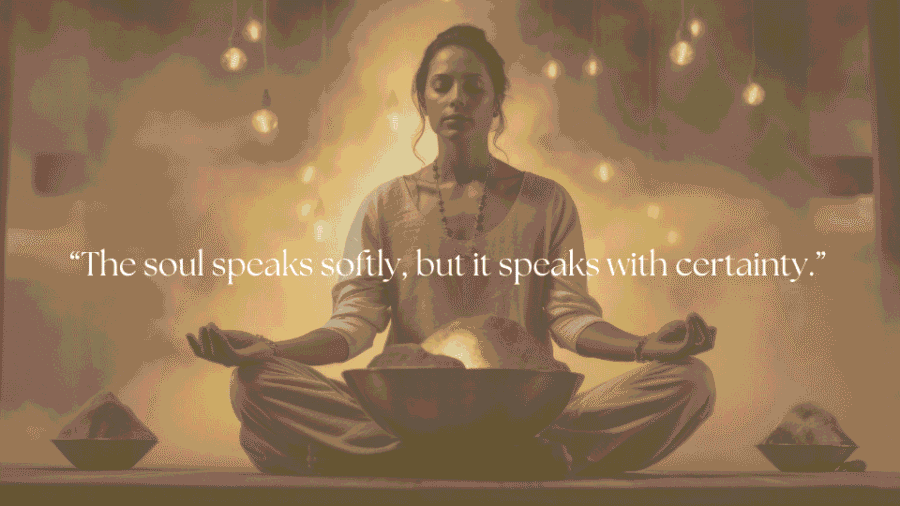
“The soul speaks softly, but it speaks with certainty.”
“What feels quiet inside may actually be sacred guidance.”
“Truth is often first felt before it is fully understood.”
“There is wisdom in the pause before the next decision.”
“The inner voice grows stronger when comparison grows weaker.”
“When distraction fades, awareness returns.”
“The spirit often reveals direction through calm, not pressure.”
“The soul does not compete for attention; it waits for presence.”
“Clarity often arrives when the mind finally stops forcing answers.”
“The deepest guidance is usually gentle, not dramatic.”
“A quiet heart can hear what a restless life cannot.”
“What is true does not need to scream to be real.”
“Listening inward is often the first act of healing.”
“Peace increases where inner honesty begins.”
“The soul has its own language, and silence helps translate it.”
“There is often more truth in one still moment than in a hundred anxious thoughts.”
“The voice within becomes trustworthy when it is truly heard.”
“Some answers appear only after the noise has been released.”
“The spirit does not rush clarity; it unfolds it.”
“What feels like emptiness may actually be space for truth.”
“The inner self often speaks through peace, not panic.”
“A quiet life makes room for a clear soul.”
“Personal truth often returns when the performance ends.”
“Stillness is not absence; it is access.”
“The soul leads gently, but it leads faithfully.”
“There are truths that can only be heard inwardly.”
“When the outside world becomes overwhelming, the inner world becomes essential.”
“The deepest voice is often the calmest one.”
“Awareness begins where distraction loses power.”
“The soul often says the same truth until it is finally honored.”
“Inner direction grows clearer when fear is no longer in charge.”
“The heart notices what the hurried mind overlooks.”
“Sacred clarity often arrives through quiet reflection.”
“A truthful pause can change the direction of a life.”
“The soul does not get lost; it waits to be rejoined.”
“There is guidance in stillness for those willing to remain there.”
“Silence becomes meaningful when it is used to listen.”
“The most important conversation is often the one happening within.”
“When the spirit is heard, confusion begins to soften.”
“The inner voice is often less dramatic than fear, but far more trustworthy.”
“The soul offers direction before the world offers approval.”
“The return to self often begins with one honest quiet moment.”
Quotes about identity and becoming
“No one is here to become someone else; each soul is here to remember who it is.”
“Healing reveals the self that fear once tried to hide.”
“The soul does not measure life by approval, only by alignment.”
“The real journey is not outward first, but inward.”
“Wholeness often begins by returning to the parts once left behind.”
“Authenticity is the soul’s version of peace.”
“Growth is not always becoming new; sometimes it is becoming true.”
“The truest self is often uncovered, not invented.”
“What is real within does not need performance to survive.”
“The soul becomes visible where pretending comes to an end.”
“Identity deepens when comparison loses its grip.”
“Becoming whole often means welcoming the self that was once rejected.”
“The deepest transformation is often a return, not a reinvention.”
“The soul feels lighter when it no longer has to perform.”
“Real becoming begins when false versions are released.”
“There is freedom in no longer trying to become what never felt true.”
“The self is discovered in honesty, not perfection.”
“Inner alignment matters more than outer applause.”
“The journey inward reveals what the world never had the power to define.”
“Some versions of the self were built for survival, not for peace.”
“The soul is not asking for imitation; it is asking for truth.”
“Identity becomes clearer when fear stops writing the story.”
“What is deeply true does not need constant proving.”
“Personal truth often appears after approval is no longer the goal.”
“Becoming is sacred when it is rooted in honesty.”
“The soul does not bloom through pressure alone, but through truth.”
“A life feels lighter when it begins to reflect the real self.”
“The deepest self is often the quietest part, not the loudest one.”
“Wholeness begins where self-rejection ends.”
“The true self is not fragile; it is simply buried sometimes.”
“What was hidden for protection may now be ready for healing.”
“Personal identity becomes stronger when it is no longer built around fear.”
“The soul does not become itself by force; it unfolds through honesty.”
“Growth is not betraying the past; it is honoring deeper truth.”
“The self becomes clear when life becomes sincere.”
“Inner becoming often looks quieter than the world expects.”
“The truest parts of a person often return slowly and gently.”
“Authenticity feels peaceful because it ends inner division.”
“The soul was never asking to be impressive, only truthful.”
“The deepest beauty appears when a person begins living from within.”
“Inner truth does not always look dramatic, but it always changes direction.”
“The becoming process is sacred because it asks for honesty before achievement.”
“A soul in alignment no longer needs to imitate someone else’s path.”
“Identity matures when it is rooted in truth instead of approval.”
“The real self does not appear all at once; it returns in pieces.”
“What once felt lost may simply have been waiting for safety.”
“Wholeness grows where truth is welcomed without shame.”
“The soul recognizes itself when the noise of pretending fades.”
“Becoming real is often more powerful than becoming admired.”
“The deepest form of self-discovery is remembering what was always there.”
Quotes about healing and surrender
“Some doors open only after what was never meant to be carried is released.”
“The soul heals when it is finally allowed to tell the truth.”
“Letting go is not losing the self; it is making room to find it again.”
“What breaks old certainty may awaken deeper wisdom.”
“Surrender is not weakness; it is trust in what the spirit already knows.”
“Healing begins where resistance softens.”
“The soul grows lighter when it is no longer carrying what love did not ask it to carry.”
“Release is often the doorway to renewal.”
“There is peace in no longer forcing what no longer fits.”
“Healing is not always loud; often it is a quiet return to truth.”
“Surrender makes space for what control cannot create.”
“The heart rests when it stops fighting reality.”
“Some wounds begin healing the moment they are honestly named.”
“Not every ending is a loss; some are an invitation to freedom.”
“The soul does not fear release as much as the ego does.”
“Healing deepens when self-honesty becomes gentle instead of harsh.”
“To let go is sometimes the most courageous form of trust.”
“The spirit often heals in the places where pretending has ended.”
“What is surrendered with truth often returns as peace.”
“Pain changes shape when it is met with compassion.”
“The soul heals in safe truth, not in forced strength.”
“Peace often begins where control is loosened.”
“Letting go creates room for grace.”
“The deepest healing does not erase the story; it transforms the relationship to it.”
“Surrender is not giving up on life; it is giving up the need to dominate it.”
“The heart heals when it no longer has to prove its pain.”
“Release often feels frightening right before it feels freeing.”
“The soul becomes more visible when old burdens become lighter.”
“Healing honors truth without turning it into identity.”
“Not everything needs to be fixed to be released.”
“The spirit grows stronger each time it chooses peace over control.”
“There is wisdom in knowing when to hold on and when to soften.”
“Some healing begins with rest, not effort.”
“Grace enters more easily where resistance loosens.”
“The soul often recovers in quiet places.”
“What is meant to stay does not always need to be forced.”
“Surrender often reveals that not everything depended on control.”
“The deepest healing is not becoming untouched; it is becoming whole.”
“There is sacred strength in releasing what no longer honors the heart.”
“Healing teaches the soul how to breathe again.”
“A burden carried too long can start to feel normal until it is finally released.”
“Peace returns when old wounds are no longer hidden under performance.”
“The soul does not ask for perfection to heal, only honesty.”
“What is surrendered in truth often becomes wisdom later.”
“Healing unfolds at the pace trust allows.”
“Sometimes surrender is the holiest form of self-respect.”
“The spirit does not need pressure to heal; it needs space, truth, and tenderness.”
“Letting go can feel like loss until it begins to feel like relief.”
“When control loosens, peace often has room to enter.”
“The soul heals not by becoming harder, but by becoming more honest.”
Quotes about purpose and direction
“Purpose is rarely found in pressure; it is revealed in presence.”
“The path becomes clearer when the self is no longer being abandoned.”
“The soul does not rush; it unfolds.”
“Clarity comes when life begins to reflect what the spirit truly values.”
“Not every delay is denial; some pauses are sacred redirection.”
“Direction often appears after inner alignment, not before it.”
“Purpose is not always loud; sometimes it arrives as quiet conviction.”
“The spirit recognizes the path long before the ego approves it.”
“A meaningful life grows from alignment, not urgency.”
“The clearest path is often the one that brings peace with truth.”
“Purpose deepens where comparison fades.”
“What is meant for the soul rarely requires pretending.”
“The right direction often feels grounding before it feels exciting.”
“Clarity is born where inner truth and outward action begin to match.”
“The soul’s pace is different from the world’s deadlines.”
“Direction becomes visible when distraction loses authority.”
“Some answers come only after enough stillness has been practiced.”
“Purpose does not always begin with certainty; often it begins with sincerity.”
“A life of meaning is built one aligned step at a time.”
“The soul does not need to race to arrive where it belongs.”
“There is wisdom in honoring timing that cannot be forced.”
“Inner direction grows stronger when fear is no longer leading.”
“Purpose feels clearer when it no longer needs to impress anyone.”
“The heart often knows when the path is true before the mind can explain why.”
“A sacred path may feel quiet, but it still carries power.”
“The spirit unfolds its direction through lived honesty.”
“Meaning is often found where truth and service meet.”
“The soul’s calling often sounds like peace mixed with courage.”
“Not every closed door is punishment; some are protection.”
“A redirected path can still be a faithful one.”
“Purpose becomes clearer when life is no longer built around fear alone.”
“The deepest direction is not always external; sometimes it is inward restoration.”
“The soul honors timing that panic cannot understand.”
“Sacred direction may begin with one honest decision.”
“The path of purpose becomes visible through presence, not panic.”
“What feels aligned may unfold slowly, but it unfolds deeply.”
“Meaning grows stronger when life is rooted in what truly matters.”
“The spirit is not confused by delay the way the ego is.”
“Direction appears more clearly when the heart stops chasing every voice.”
“Some journeys become clear only after the need for certainty softens.”
“Purpose is less about proving worth and more about living truth.”
“A peaceful yes is often wiser than a pressured yes.”
“The path that honors the soul may also require courage.”
“Inner alignment often becomes the map.”
“What is sacred for one life may look ordinary to others and still be true.”
“The next step is often revealed only after the present one is honored.”
“Direction becomes simpler when values become clearer.”
“Purpose is not always discovered all at once; it is often remembered gradually.”
“The soul moves meaningfully, even when it moves slowly.”
“The truest direction is the one that allows the spirit to remain honest.”
How to Use Spiritual Quotes for Daily Self-Discovery
Start with one quote, not many
A common mistake is collecting too many quotes without sitting with any of them long enough. It may feel productive, but it often remains surface-level. Self-discovery deepens when one meaningful idea is explored more fully rather than when dozens are skimmed quickly.
A simple practice is to choose one quote in the morning or evening, read it slowly, and ask:
- What part of this quote feels true in the current season of life?
- What emotion does it bring forward?
- What does it seem to reveal?
- What small action would reflect this truth today?
This method is simple, but it can be deeply effective. One quote can become a mirror, a question, and a next step all at once.
Use journaling to turn inspiration into insight
A quote becomes more transformative when there is an honest response to it. That is why journaling remains one of the strongest ways to use spiritual quotes for self-discovery. It turns a meaningful sentence into a personal conversation with the inner self.
For example, consider this quote: “Wholeness often begins by returning to the parts once left behind.”
A reflection journal could explore questions such as:
- Which parts of the self were hidden in order to survive or fit in?
- When did that hiding begin?
- What would it look like now to welcome those parts back with compassion?
This kind of reflection often leads to powerful clarity. Many people discover that what once looked like weakness was actually sensitivity, what looked like failure was redirection, and what felt like confusion was actually the beginning of truth.
For readers who want stronger structure in this practice, the deep journaling prompts for self-reflection is a natural fit.
Pair quotes with affirmations
Spiritual quotes often reveal truth. Affirmations help reinforce it. A quote might help someone realize that they have been abandoning their own needs or suppressing their own truth. An affirmation helps begin the process of living differently.
Quote: “Inner peace begins the moment personal truth is no longer ignored.”
Affirmation: “Personal truth is honored with calm, honesty, and courage.”
Quote: “The soul does not rush; it unfolds.”
Affirmation: “This journey is allowed to unfold with trust and patience.”
This pairing works because it combines insight with repetition. Insight awakens awareness. Repetition helps new emotional and mental patterns take root. The positive affirmations for self-discovery works especially well for this.
The Best Times to Use Soul-Deep Quotes
During major life transitions
People often turn to spiritual quotes when life begins to shift shape. That can include loss, heartbreak, career change, burnout, a move, spiritual awakening, emotional confusion, or a season of questioning. During these periods, quotes can act as emotional anchors.
A strong quote does not remove uncertainty, but it can bring steadiness. It keeps attention connected to inner meaning when outer life feels unstable. In times of transition, even one sentence can create direction and grounding.
A practical reflection ritual can help here. One quote can be chosen for the week, read each morning, journaled on twice during the week, and reviewed at the end of the week for what it revealed. The weekly planning tool for mindful living can help organize this gently and consistently.
In seasons of burnout or emotional numbness
Burnout affects more than energy. It often impacts identity, motivation, emotional presence, and self-connection. When people are burned out, they often describe feeling unlike themselves. That is not only a productivity issue. It is also a self-discovery issue.
During burnout, it is better to avoid quotes that create pressure. Instead, quotes that bring gentleness, honesty, stillness, compassion, and emotional permission are more healing.
For example:
“Sometimes the soul asks for stillness before it asks for strength.”
“Rest is not the absence of growth; it is part of becoming.”
These kinds of quotes help because they speak to worth beyond performance. They encourage compassion rather than overexertion.
During meditation or prayer
Spiritual quotes can also support meditation, prayer, and quiet spiritual practice. A single line repeated slowly can focus the mind, soften anxiety, and give the heart something steady to return to.
One simple method is to use one quote as a meditation anchor for five minutes. Sit quietly, breathe slowly, repeat the quote gently, and notice what thoughts, emotions, or memories arise. This can become a meaningful mindfulness habit.
For readers who struggle with distraction, the focus timer for meditation and reflection can help create a dedicated reflection window.
What Makes a Spiritual Quote Truly Transformative?
It tells the truth without forcing it
The most transformative quotes do not exaggerate, manipulate, or promise instant healing. They offer grounded truth in gentle language. They make room for complexity. They acknowledge pain while still pointing toward meaning and wisdom.
For example, “What breaks old certainty may awaken deeper wisdom” carries power because it does not deny difficulty. Instead, it reframes it. That reframing is often where healing begins.
A quote becomes trustworthy when it sounds emotionally honest. Readers respond to it because it does not feel fake, shallow, or overly polished. It feels real.
It meets readers where they are
A spiritually mature quote does not assume everyone is in the same emotional or spiritual place. Some people need rest. Some need hope. Some need courage. Some need release. Some need clarity. The best quotes meet the reader where they are.
That is why the same quote may feel ordinary during one season and life-changing during another. Timing matters. Inner season matters. A sentence that once seemed simple may later become exactly what was needed after a specific experience.
It turns reflection into action
The deepest quotes do not only stir emotion. They also inspire movement. That movement may be small:
- setting a boundary
- resting without guilt
- speaking honestly
- journaling consistently
- forgiving the self
- saying no to what feels misaligned
- taking a walk in silence
- making one healthier daily decision
This is where self-discovery becomes practical and embodied. It moves from thought into life.
Questions People Ask About Self-Discovery and Spiritual Quotes
How do spiritual quotes help people find themselves?
Spiritual quotes help people reconnect with themselves by revealing inner truths that daily noise often hides. They encourage self-reflection, emotional honesty, and deeper alignment with personal values. A meaningful quote can highlight what has been avoided, what is truly needed, or what the soul has quietly been trying to say.
They are especially helpful during seasons of feeling lost or disconnected because they simplify what feels emotionally complex. Rather than solving everything at once, one quote offers one truth to sit with, and that is often enough to begin returning to the self.
Can quotes really support healing and personal growth?
Yes, especially when used intentionally. A quote alone may not transform a life, but it can absolutely begin the process. It can shift perspective, validate pain, inspire hope, and open deeper reflection. When combined with journaling, mindfulness, therapy, prayer, coaching, or personal reflection, spiritual quotes can become powerful emotional tools.
Their value depends greatly on how they are used. Reading them passively is one thing. Reflecting on them honestly is something much deeper.
What is the best spiritual quote for self-discovery?
There is no one quote that is best for every person because self-discovery is personal. The best quote is the one that speaks most truthfully to the current season. For one reader, that may be a quote about surrender. For another, it may be about courage, worthiness, silence, healing, or trust.
A helpful question is this:
What truth feels most necessary right now, even if it is uncomfortable?
The quote that answers that question is often the most powerful one to keep close.
A Simple 7-Day Practice for Using Spiritual Quotes
If the goal is to move beyond reading and into real application, the following 7-day practice can help.
| Day | Focus | Practice |
| Day 1 | Awareness | Choose one quote that immediately resonates and write why |
| Day 2 | Emotion | Notice what feelings the quote brings up |
| Day 3 | Story | Write about a life moment connected to the quote |
| Day 4 | Truth | Ask what the quote reveals about the current season |
| Day 5 | Action | Take one small step inspired by the quote |
| Day 6 | Integration | Create an affirmation based on the quote |
| Day 7 | Reflection | Review what was learned through the week |
This kind of structure helps turn inspiration into spiritual practice. To make it even more practical, readers can combine it with the goal tracker for personal growth habits to follow aligned actions or the daily planning tool for self-care routines to create a daily reflection space.
Signs a Quote Is Speaking Directly to the Soul
Sometimes a quote stands out immediately. Sometimes it lingers quietly. Sometimes it feels slightly uncomfortable because it says something that was not ready to be faced. All of those reactions can be meaningful.
Here are some signs that a quote may be speaking directly to the soul:
- it stays in the mind long after being read
- it creates unexpected emotion
- it feels deeply accurate
- it gives language to something difficult to express
- it creates calm, clarity, or the feeling of being seen
- it creates the desire to pause, breathe, pray, write, or reflect
- it points toward a truth that has been resisted
This is why soul-deep spiritual quotes are more than decoration. They are reflective tools. They can reveal what matters most beneath the surface.
Common Mistakes to Avoid When Using Spiritual Quotes
Treating quotes like decoration only
There is nothing wrong with saving beautiful quotes, posting them, or collecting them. But if they remain only aesthetic, much of their transformational value is lost. A quote becomes truly useful when it enters life, not only a quote collection.
Instead of endlessly collecting, it helps to slow down and ask what the quote is actually inviting. Reflection creates value.
Using quotes to bypass real emotion
Sometimes spiritual language is used to avoid pain rather than move through it. This is often called spiritual bypassing. Repeating positive lines while ignoring grief, anger, fear, or disappointment can create more disconnection, not less.
A healthy spiritual quote does not erase emotion. It helps a person face emotion with truth and wisdom. Self-discovery requires honesty, not performance.
Looking for instant transformation
A quote can shift perspective quickly, but deep change usually happens through repetition, reflection, and aligned action. It is better to think of quotes as seeds rather than shortcuts. They can open the heart quickly, but inner growth still needs time, honesty, and consistency.
That is why rhythm matters. Even ten minutes a day of reflection, journaling, and mindful action can become more powerful than endless inspiration with no integration.
Internal Growth Practices That Pair Well With Spiritual Quotes
Journaling
Journaling helps process the personal meaning of a quote. It moves the experience from passive reading to active self-awareness. This is one of the most effective ways to support self-discovery.
Best paired tool: self-discovery journal prompts
Daily affirmations
Affirmations reinforce the emotional and spiritual truth revealed by the quote. They are useful for strengthening healthier beliefs, emotional patterns, and self-talk.
Best paired tool: daily affirmations for inner peace
Time-blocked reflection
Many people want to reflect more, but never create time for it. A timer or focus session can make the practice easier and more sustainable.
Best paired tool: focus timer for mindfulness practice
Weekly review
A weekly check-in helps readers notice recurring patterns across the quotes that resonated most, the emotions that repeated, and the actions that followed.
Best paired tools: weekly planner for balanced living and habit and goal tracker for self-improvement
Daily structure
If spiritual reflection is meant to become part of everyday life instead of an occasional idea, building it into a simple routine is one of the best approaches.
Best paired tool: daily planner for mindful routines
Related Reading
For readers who want to explore this topic more deeply, the following internal articles and tools fit naturally with this article and help build a stronger spiritual growth journey:
- Begin with the wider foundation in spiritual quotes about life, healing, and peace
- Explore practical application through how to practice spiritual wisdom every day
- Continue with emotional release in healing quotes about letting go and moving forward
- Build present-moment awareness in mindfulness quotes for awareness and presence
- Find encouragement through spiritual quotes for hard times and emotional strength
- Reinforce truth and inner language through daily spiritual affirmations for positive thinking
- Discover deeper insight in famous spiritual teacher quotes about life and truth
These related pieces create stronger topical depth around spiritual quotes, self-discovery, healing, inner peace, mindfulness, and personal transformation, while also helping readers move naturally from inspiration into practice.
Conclusion
Soul-deep spiritual quotes for self-discovery matter because they do more than inspire. They reveal. They help create enough stillness for the inner self to be heard more clearly. They give language to emotions that may not yet be fully named, truth for seasons that may still feel confusing, and perspective for moments that feel emotionally heavy.
The deeper purpose of these quotes is not simply to make life sound poetic. It is to help life become more honest from within. They remind readers that self-discovery is not about becoming impressive. It is about becoming real. It is about remembering what remains beneath fear, performance, old wounds, and constant distraction.
If this practice is meant to shape life in a meaningful way, simplicity matters. One quote can be chosen. One honest reflection can follow. One journal entry can reveal insight. One small action can begin change. Repeated over time, that small practice can become a quiet path back to inner truth.
And that may be one of the greatest gifts of spiritual wisdom. It does not always deliver every answer immediately. But it often helps people return to the place where real answers begin.
FAQs
What are soul-deep spiritual quotes?
Soul-deep spiritual quotes are meaningful reflections that speak to the inner self, emotional truth, spiritual growth, and personal alignment. They go beyond surface-level motivation and support self-discovery, healing, and inner clarity.
How can spiritual quotes be used for self-discovery?
One effective way is to choose a quote that resonates with the current season of life, reflect on why it feels meaningful, journal about it, and take one small action based on the insight it reveals. This helps turn inspiration into personal growth.
Are spiritual quotes useful during difficult times?
Yes. During grief, heartbreak, burnout, confusion, or life transitions, spiritual quotes can provide comfort, emotional grounding, perspective, and hope. They often remind readers that even difficult seasons can contain wisdom and transformation.
How often should spiritual quotes be used for reflection?
Daily or weekly reflection can both work well. Even five to ten minutes of sincere reflection can become meaningful when practiced consistently. The real value comes from depth and regularity.
What is the difference between a spiritual quote and an affirmation?
A spiritual quote usually offers wisdom, perspective, or insight. An affirmation is a personal statement repeated to strengthen a belief or emotional truth. Quotes often awaken awareness, while affirmations help reinforce change.
Can spiritual quotes improve mindfulness?
Yes. Spiritual quotes encourage pause, presence, and conscious reflection. When used in journaling, meditation, prayer, or daily quiet time, they can support stronger mindfulness, emotional awareness, and inner peace.