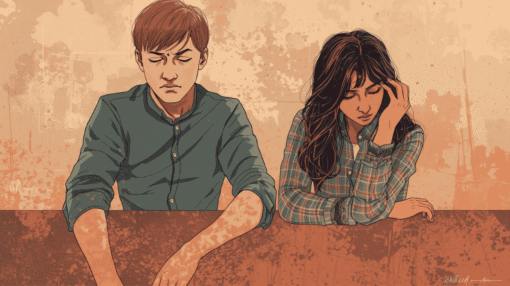
There’s a particular kind of silence that exists between two people who used to tell each other everything. Not the comfortable silence of old friends — but the kind where both people are choosing their words too carefully, laughing a little too quickly, and leaving the real things unsaid.
That silence is what trust erosion sounds like.
Trust is not a feature of friendship. It is the foundation. Without it, even the longest, most history-rich friendships begin to hollow out from the inside — slowly, quietly, and often without either person naming what’s actually happening.
This guide covers everything: what trust in friendship truly means, why familiarity alone isn’t enough, how to recognize when it’s gone, and what it takes to either rebuild it — or make peace with letting go.
What Trust in Friendship Actually Means
Most people associate trust with loyalty — and while loyalty is part of it, trust runs deeper than that.
Trust in friendship means believing that your friend won’t use your vulnerability against you. That they’ll protect your truths, even when you’re not in the room. That they’ll be honest with you — not just when it’s easy, but especially when it’s hard.
It’s the emotional contract underneath every close friendship: You can count on me, and I believe I can count on you.
This is where emotional intimacy in friendship begins — in those quiet exchanges where someone allows their mask to slip, and the other person doesn’t flinch. In the late-night conversations. In the things shared not because they’re easy to say, but because the friendship feels safe enough to hold them.
Trust also shows up in smaller, less dramatic ways:
- A friend who remembers what you mentioned once, weeks ago, and asks about it
- Someone who keeps what you shared — even when it would make a good story
- The person who tells you a hard truth because they value the relationship more than your temporary comfort
- The one who defends you in rooms you’ll never walk into
These are not grand gestures. But they are the building blocks of something rare: a friendship where you don’t have to perform, protect yourself, or shrink.

Why Familiarity Is Not the Same as Trust
Here’s the quiet trap that catches many long-term friendships: we confuse shared history with ongoing trust.
Having years of memories together doesn’t mean the trust is still intact. Relying on the past — on the “we’ve always been fine” feeling — can mask deeper issues that have been quietly building: unresolved conflicts, repeated disappointments, unspoken resentments, and the slow realization that you’ve both changed but haven’t acknowledged it.
Picture two people who’ve known each other for years. They meet for coffee, laugh about old times — yet something feels off. There’s a pause before personal topics. Jokes land awkwardly. Certain subjects get quietly redirected.
The problem isn’t a fight. It’s the absence of emotional safety.
When the belief I can count on this person shifts — even slightly — to I’m not sure they have my back, something changes in how you show up. You start self-editing. You share the highlight reel instead of the full picture. You stop leaning in.
Over time, both people drift through the motions of friendship while the actual bond deteriorates underneath. The history remains. The connection, slowly, doesn’t.
This is what a friendship built on nostalgia looks like from the inside — warm in memory, hollow in the present.
Signs That Trust Has Eroded
Trust rarely disappears in a single moment. It fades in patterns. Here’s what that looks like in practice:
Unspoken resentment. Conversations about old hurts are avoided entirely. Both people remember what happened — but neither brings it up. The silence feels easier than the confrontation, until it becomes a wall.
Emotional inconsistency. One person shares deeply while the other holds back. The give-and-take that characterizes real friendship has shifted into something imbalanced — and one person carries the weight of that imbalance alone.
Silent withdrawal. Shorter replies. Longer delays. Vague excuses. No single absence stands out, but the cumulative effect is unmistakable — the other person has receded.
Over-reliance on the past. When “we’ve always been close” becomes the main reason to stay in a friendship, rather than what’s actually happening between you now, it’s worth paying attention to.
Broken boundaries that go unaddressed. One person oversteps — again and again — and the other tolerates it out of loyalty to the history. History doesn’t make repeated disrespect acceptable. But without trust in the relationship’s ability to handle honesty, the pattern just continues.
Conversations that stay surface-level. You talk. You laugh. Nothing real is said. Vulnerability has left the building.
What Happens When Emotional Safety Is Gone
Without trust, vulnerability becomes a risk that doesn’t feel worth taking. So people stop taking it.
Masks go on. Genuine laughter becomes performative. You still show up to the coffee, the dinners, the birthday messages — but it feels like going through the motions. Like flipping through a photo album of a friendship rather than actually living inside one.
The relationship becomes what it looks like from the outside, rather than what it actually is on the inside.
And what’s quietly devastating about this is that it often goes unnamed for a long time. Neither person announces that something is broken. The friendship doesn’t end dramatically. It just… recedes. Plans get made and quietly unmade. Responses get shorter. The space between real conversations grows.
It fades into a routine of missed opportunities — and at some point, both people have stopped reaching.
Why Trust Is Built Over Time — Not Given All at Once
There is no shortcut to building genuine trust. It develops through repetition — through someone showing up not just once, but consistently, across different seasons and circumstances.
It deepens through what researchers in psychology call emotional transactions: moments where you share something real, and the other person meets it with care rather than judgment. Where you ask for support, and they don’t hesitate. Where they keep something you told them in confidence, even when it would have been easy not to.
Trust in friendship is built in the invisible moments:
- Sitting with someone in silence after their world fell apart, without trying to fix it
- Calling at midnight just to say you’re proud of them
- Forgiving after a rough argument because the friendship matters more than being right
- Defending someone when it would have been easier to stay quiet
- Asking “what’s actually going on?” when someone says “I’m fine” and clearly isn’t
These are the deposits that, over time, create something that can withstand distance, disagreement, and difficulty.
And when trust exists — when it’s genuinely solid — conflict doesn’t feel like a threat to the friendship. It feels like a conversation. A necessary pause, not a permanent break. There’s room for human imperfection because the foundation is strong enough to hold it.
When to Try to Rebuild — and How
If you sense that trust has eroded in a friendship that matters to you, the first step is naming it — at least to yourself.
Trust repair doesn’t happen by pretending nothing is wrong. It doesn’t happen through hints or passive distance, either. It begins with someone being willing to say: something between us feels off, and I want to talk about it.
Here’s what that process actually looks like:
1. Acknowledge the cracks honestly. Before any conversation can happen, you have to be clear within yourself about what’s changed. What do you no longer feel safe sharing? When did that shift? What specifically happened — or didn’t happen — that created that distance?
2. Understand where the trust deficit came from. Is it a single incident that was never addressed? A pattern of behavior that repeated without accountability? Unspoken expectations that neither of you ever articulated? Naming the source matters — because without understanding what broke, it’s difficult to know what rebuilding actually requires.
3. Have the honest conversation. This is the part most people avoid. Bring it up gently but directly: “I feel like something has shifted between us, and I miss how we used to be. Can we talk about it?” You don’t need blame. You need honesty, and the willingness to hear what the other person has been carrying too.
4. Set clear expectations going forward. Trust rebuilding requires new agreements — not the unspoken assumptions that existed before, but explicit commitments. What does reliability look like between you? What do you each need in order to feel safe again?
5. Test reliability with small actions. Big promises mean little if small ones don’t land. After a rupture, trust is rebuilt incrementally — one kept commitment, one honest conversation, one moment of genuine follow-through at a time. Watch for consistency in the small things. That’s where the real information lives.
6. Give it time, and pay attention to patterns. Rebuilding isn’t linear. There will be moments that feel like progress and moments that don’t. What you’re looking for, over time, is a pattern of genuine accountability and effort — not perfection, but sincerity.
If both people are willing to do this work — if genuine accountability arises and both commit to honesty and consistency — trust can be rebuilt. Sometimes the bond that emerges is even stronger, shaped by the resilience it took to repair.
But both people have to be willing.
When to Let Go
Not every friendship can or should be repaired.
If you’ve tried to address what’s broken and been met with dismissal, denial, or a return to the same patterns — that’s information. If the emotional cost of maintaining the friendship consistently outweighs what you receive from it, that’s also information.
Letting go of a friendship is not a failure. It is not a betrayal of the history you shared. Sometimes it’s simply the honest recognition that the relationship — as it currently exists — is no longer a place of emotional safety, and that staying isn’t serving either of you.
Walking away from something that once mattered takes courage. So does staying and doing the work to repair it. The question is which choice actually honors both people — and which one you can make with integrity.
Quotes on Trust in Friendship
Sometimes the right words help clarify what we’ve been feeling but haven’t been able to name. These are genuine reflections on trust, friendship, and what it means to feel truly safe with another person.
“The shifts and changes in friendship are rarely dramatic. They’re quiet — a slower reply, a topic quietly redirected, a joke that lands in a room already half-empty.”
“Trust is built in the moments no one witnesses. It’s the thing you didn’t say about them when you easily could have.”
“A friendship without trust is still a relationship. It’s just not a safe one.”
“The most enduring friendships aren’t the ones with the smoothest history — they’re the ones where both people chose honesty over comfort, more than once.”
“You know trust is real when silence between you isn’t something that needs to be filled.”
“Distance, time, disagreement — none of these end friendships. What ends them is the quiet decision, by one or both people, to stop being honest.”
“The greatest gift a friend can give you is the experience of being fully known — and not running.”
“Trust doesn’t announce itself. It shows up in small, repeated choices: the secret kept, the call made, the honest thing said even when it cost something.”
“When a friend becomes a place of rest — somewhere you can collapse emotionally without performing — that’s when you know trust has done its quiet work.”
“Longevity is not loyalty. History is not safety. Trust is something that has to be actively maintained — or it doesn’t hold.”
“The hardest part of losing trust in a friendship isn’t the distance that follows. It’s the loss of the place where you used to feel at home.”
“Some friendships survive on nostalgia alone for years. But nostalgia doesn’t protect you. Trust does.”
“If you can say the uncomfortable thing and still be met with kindness — stay. That friendship is rare.”
“Rebuilding trust is not about going back to how things were. It’s about choosing, together, who you want to be going forward.”
“The people worth keeping are rarely the ones who never hurt you. They’re the ones who — when they did — were willing to look at it honestly.”
Final Thoughts
History alone does not sustain a friendship. What sustains it is ongoing emotional safety, mutual honesty, and the consistent willingness to show up — not perfectly, but sincerely.
A friendship without trust is like a house without a foundation: the walls can stand for a while, but the cracks will widen. Not dramatically. Quietly. Until one day, you realize the structure you thought was solid has been hollow for longer than you knew.
If you sense those cracks in a friendship that matters to you — don’t ignore them. Name what you’re feeling. Have the conversation that’s been avoided. Give the relationship a real chance to heal.
And if that chance isn’t taken — by one or both of you — let yourself grieve what it was, and make space for what can be.
What remains in your life should be more than nostalgia. It should be a bond strong enough to actually build on.
Read more about Quotes About Friendship: Trust, Love and Deep Connection