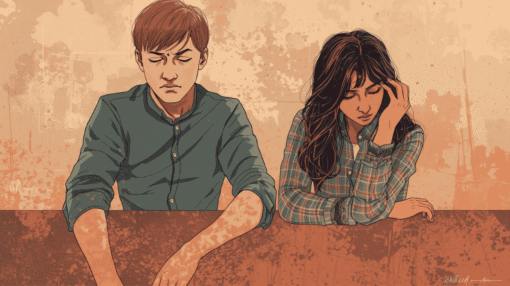
Trust doesn’t break all at once. Usually it erodes — through a pattern of small disappointments, one significant betrayal, or the quiet accumulation of moments where someone wasn’t there in the way you needed. And by the time you name it, the damage has often been building for longer than either person realized.
Rebuilding trust after it’s been broken is one of the harder things two people can attempt in a friendship. It requires honesty from both sides, patience on the part of the person who was hurt, and consistent follow-through from the person who caused the damage. There are no shortcuts, and there’s no timeline that applies to everyone.
But it is possible — and when it works, what’s rebuilt is often stronger and more honest than what existed before.
This guide walks through the actual process: not in vague principles, but in concrete, specific steps.
First: Understand What Kind of Break You’re Dealing With
Not all trust breaks are the same, and the path to rebuilding depends significantly on what happened.
A single significant incident — a secret shared, a lie told, a serious absence during a crisis — tends to create a clear break point. There’s a before and after. This kind of rupture is painful, but it’s often easier to address because both people know what they’re dealing with.
A pattern of smaller failures — unreliability, inconsistency, repeated disappointments that were never addressed — is often harder to rebuild from, because there’s no single incident to point to. The erosion has happened gradually, and there’s more to unpack.
A betrayal of confidence — something shared in trust that was passed on — tends to create the deepest wound, because it doesn’t just damage the relationship. It makes the injured person question every vulnerable moment they’ve had in the friendship.
Knowing what you’re working with helps you understand what repair actually requires.
Step 1: The Person Who Caused the Harm Has to Go First
This is the most important principle in trust repair, and the one most often skipped.
If you broke someone’s trust — whether through a clear incident or a long pattern of behavior — the work of rebuilding begins with you. Not with a request for understanding. Not with an explanation. With accountability.
This means:
Acknowledging specifically what happened. Not “I’m sorry if you felt hurt” — but “I shared something you told me in confidence, and that was a betrayal.” The more specific the acknowledgment, the more credible it is. Vague apologies often feel like the person is apologizing for the other person’s reaction rather than taking responsibility for their own actions.
Not leading with explanation. There may be context worth sharing eventually — but in the initial conversation, leading with reasons often reads as excuse-making. The injured person needs to feel heard before they can receive context.
Not attaching conditions to the apology. “I’m sorry, but you have to understand…” is not accountability. It’s negotiation. Real accountability has no “but.”
Saying clearly what you intend to do differently. An apology without a behavioral commitment is incomplete. What will actually change? Be specific.
Step 2: The Person Who Was Hurt Gets to Set the Pace
This is where most repair attempts break down.
The person who caused the damage often wants resolution quickly. The discomfort of having hurt someone — combined with uncertainty about the friendship’s future — creates pressure to move past it. But pushing for quick resolution is one of the most reliable ways to prevent actual repair.
Trust is rebuilt on the timeline of the person who was hurt. Not the person who is sorry.
This means:
- Giving space if space is asked for — without interpreting it as abandonment or rejection
- Not repeatedly revisiting the apology or asking “are we okay now?” before the other person is ready
- Understanding that the injured person may have good days and bad days with it — and that inconsistency in their recovery is normal, not a sign that repair is impossible
- Not making the injured person responsible for managing your guilt or anxiety about what happened
The person who was hurt did not cause this situation. They should not have to carry additional emotional labor to make the person who did feel better.
Step 3: Have the Full Conversation — Not Just the Apology
An apology is a beginning, not an endpoint.
At some point — when both people are ready — a fuller conversation needs to happen. This is where the real work of understanding takes place: not just what happened, but why it happened, what it meant, and what both people need going forward.
This conversation tends to go better when:
Both people have had time to process first. Immediate conversations after a significant breach often happen when emotions are too raw for real listening. If possible, give it a few days.
You go in to understand, not to defend. The goal of this conversation is not to reach a verdict. It’s to understand each other’s experience of what happened — including the parts that are uncomfortable.
You ask questions. “What did that feel like for you?” and “What would you have needed from me?” are more useful than any statement you can make about yourself.
You’re honest about what you don’t know. If you don’t fully understand why you acted the way you did, say so. Honesty about your own confusion is more credible than a confident explanation that doesn’t ring true.
Step 4: Establish New Expectations — Explicitly
One of the reasons trust breaks and then breaks again is that both people return to a relationship without changing any of the underlying dynamics that led to the problem.
After a significant breach, it’s worth having an explicit conversation about what each person needs going forward. Not as a negotiation, but as an honest exchange about what would make the friendship feel safe again.
This might include:
- How sensitive information will be handled
- What reliability looks like in practice — what commitments mean, what to do when plans change
- How conflict will be handled when it arises — rather than avoided until it builds into something larger
- What each person needs to feel heard and respected in the friendship
These conversations can feel formal or uncomfortable. They’re also far more useful than hoping the dynamic will somehow correct itself.
Step 5: Rebuild Through Small, Consistent Actions
This is the longest step — and the most important one.
Trust is not restored through a single grand gesture. It’s rebuilt through the accumulation of small, reliable actions over time. Every kept promise. Every confidence maintained. Every moment of showing up in the way that previously fell short.
What this looks like in practice:
Follow through on what you said you’d do. This sounds basic. It is basic. But it’s also the foundation of everything. If you said you’d call, call. If you made a plan, keep it. Reliability in small things is what communicates that the friendship is being taken seriously.
Handle their confidence carefully. If your friend begins to share personal things with you again — protect that. Treat it as a gift, because at this stage, it is.
Notice and acknowledge the effort. If your friend is giving the friendship another chance, that took courage and vulnerability on their part. Acknowledge it occasionally — not with excessive gratitude that creates awkwardness, but with genuine recognition.
Don’t revisit the breach unnecessarily. Once it’s been addressed, don’t keep bringing it up — either to apologize again or to check whether you’ve been forgiven. Let the behavior speak.

Step 6: Recognize When Repair Is Actually Working
Repair is working when:
- Your friend begins to share personal things again, gradually
- Conversations start to feel more natural and less managed
- There’s evidence of trust in small things — confiding, asking for input, making plans
- The friendship can acknowledge what happened without it derailing the interaction
It’s not working — or may not be possible — when:
- The same patterns repeat despite genuine effort
- Your friend has communicated (directly or through behavior) that they’re not ready or willing to return to closeness
- The breach comes up repeatedly in ways that feel like the wound isn’t healing
- The friendship has become one-sided in its effort — with one person consistently trying and the other consistently withdrawn
When Repair Is Not the Right Choice
It’s important to say clearly: rebuilding trust is not always the right decision.
For the person who was hurt, choosing not to rebuild is not a failure of forgiveness or generosity. Some breaches are significant enough that the cost of returning to trust — the vulnerability, the risk — is simply not worth what the friendship offers. That’s a legitimate conclusion, and it deserves to be respected.
For the person who caused the damage, accepting that repair may not be possible — despite genuine effort and accountability — is one of the harder aspects of having broken someone’s trust. But demanding a return to friendship after a betrayal is not something the injured person owes you.
The work of accountability and repair is worth doing regardless of outcome. It makes you a better friend to the people who remain in your life. And sometimes, that has to be enough.
Final Thoughts
Rebuilding trust in a friendship is slow, imperfect, and sometimes unsuccessful. But it’s also one of the most meaningful things two people can do — choosing to look honestly at what broke, to take responsibility for their part in it, and to try again with more clarity than before.
The friendships that come out the other side of a genuine repair often have a quality that easy friendships don’t — a depth that comes from having been tested and from having chosen each other anyway.
That’s not nothing. In fact, for the right friendship, it might be everything.
Related: Trust in Friendship: The Complete Guide | Signs Your Friend Doesn’t Trust You | How to Know When a Friendship Is Worth Saving