Why Quotes Hit Different When You’re Healing
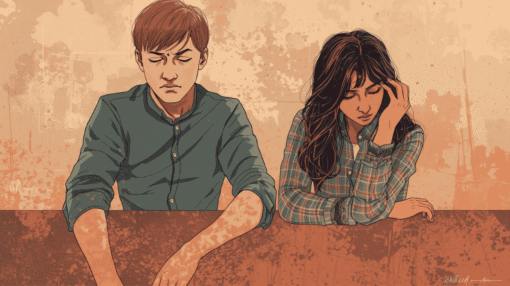
When someone betrays you, your rational mind knows the facts but your emotional mind can’t process them cleanly. You end up in a strange in-between space where logic offers no comfort and feelings come in waves you can’t predict or control.
This is where the right words — at the right moment — do something remarkable. They name what you’re feeling when you can’t find the language yourself. They interrupt the loop of replaying and questioning. They reach past the noise and land somewhere quieter — in the part of you that knows, even when everything hurts, that you are going to be okay.
This isn’t a collection of inspirational phrases. It’s a roadmap — one quote for each stage of the process of moving on, with the psychological truth behind why that stage happens and what it’s asking of you.
Stage 1: The Initial Shock — When Nothing Feels Real
“The most disorienting kind of pain is the kind that comes from someone you never expected to lose — to betrayal.”
The first hours or days after discovering a betrayal have a dissociative quality. You function on autopilot. You go through the motions of daily life while your brain is still trying to reconcile what just became true. This isn’t weakness — it’s the brain’s protective response to information it can’t immediately process.
Psychologists call this acute stress response. Your mind essentially says: this is too much all at once — let me protect you from the full force of it. And it parcels out the reality gradually, which is why the depth of betrayal often hits harder three weeks in than it did on day one.
What this stage is asking of you: Nothing yet. Just survive it. Don’t make permanent decisions in this phase. Don’t send the texts. Don’t post the thread. Don’t quit the job or upend your life. Give yourself a few days before you act. The ground will stabilize.
Stage 2: The Anger That Makes Complete Sense
“Anger after betrayal isn’t a sign that you haven’t forgiven — it’s a sign that you knew your own worth.”
Anger gets a bad reputation in healing conversations. People are often told to let it go, rise above it, not let it consume them. And yes — chronic, unprocessed anger becomes destructive. But the initial anger after betrayal? That is healthy, appropriate, and important.
Anger is your psyche drawing a boundary after the fact. It’s the part of you that says: what happened to me was not acceptable. Without anger, there is no full recognition of the wrong done to you. And without that recognition, healing tends to be shallow — you forgive too fast, reconnect too quickly, and find yourself in the same situation again because you never fully acknowledged that your boundaries were violated.
What this stage is asking of you: Feel the anger — and then direct it usefully. Exercise. Write. Make changes in your life. Let anger be the fuel that gets you moving, not the fire you keep burning yourself on. The difference between healthy anger and harmful anger is movement. Healthy anger propels you forward. Harmful anger keeps you orbiting the person who hurt you.
Stage 3: The Obsessive Loop — And How to Break It
“You cannot think your way out of a betrayal. You have to act your way out.”
One of the most frustrating parts of healing from betrayal is the obsessive thought loop. You replay conversations. You go over the timeline looking for signs you missed. You build elaborate mental models of why they did it — and then tear them down and rebuild them differently. You check their social media. You analyze their words. You conduct, in your own mind, a trial that never reaches a verdict.
This loop is not a character flaw. It’s how the brain tries to process incomplete information — specifically, information that doesn’t make sense given what you knew about the person. Your mind is seeking pattern completion. It wants to understand. It will keep seeking until it finds resolution.
The problem is that resolution doesn’t exist in the loop. It exists in action.
Every small action you take in your own life — every workout completed, every plan made, every coffee with a friend, every new experience — gives your brain new data to process. Slowly, the mental hard drive shifts from obsessively processing them to building something new. You literally cannot think your way out. You have to act.
What this stage is asking of you: Create friction between the impulse to check and the act of checking. Put their number behind a password. Add a second step to viewing their profiles. Every time the loop starts, do one small physical thing instead — stand up, drink water, step outside. Interrupt the neural pattern with movement.
Stage 4: The Grief Beneath the Anger
“When the anger clears, grief is waiting. Don’t be afraid of it — it means you loved something real.”
Once the hot fire of anger cools, many people are surprised to find sadness underneath. Deep, quiet sadness. Not for the person — but for the relationship they thought they had. For the future they imagined. For the version of themselves who was innocent of this particular kind of pain.
This grief is real and it deserves full recognition. Don’t skip it by jumping back into anger, or by forcing yourself into artificial positivity, or by immediately diving into someone new. The grief is where the real work of healing happens. It’s where you actually process the loss — and in processing it, begin to release it.
What this stage is asking of you: Let it be sad. Give it space without dramatizing it. You don’t need to cry on schedule or feel a certain way by a certain date. Grief after betrayal doesn’t follow a calendar. Some people move through it in months; others take years. What matters is not the speed — it’s that you keep moving rather than making a home in the sadness.
Stage 5: Questioning Your Own Judgment
“Your instincts didn’t fail you. They were overridden by hope. That’s not foolishness — that’s love.”
At some point in the healing process, almost everyone arrives at a painful question: Why didn’t I see it sooner? Why did I trust them? What does it say about me that I was so wrong?
This is the stage where self-doubt enters — and it can be the most damaging part of healing if not handled carefully. Because the wound isn’t just “they hurt me” — it shifts to “I let this happen.” And from there, it can become “I can’t trust myself” — which is the most corrosive belief of all.
Here’s the psychological reality: most people in loving relationships suppress signals of betrayal not because they’re naive, but because trust is the fundamental operating mode of love. When we love someone, we give them the benefit of the doubt. We interpret ambiguous evidence generously. We want to be wrong about our fears. That is not stupidity — it is what love looks like.
The fact that you trusted doesn’t mean your instincts failed. It means you loved. And that’s worth protecting.
What this stage is asking of you: Gently separate “trusting them” from “trusting yourself.” Rebuilding confidence in your own perception doesn’t require you to have been suspicious from the start. It requires you to trust that you now know more than you did before — and that information will make you wiser, not just more guarded.
Stage 6: The False Recovery — When You Think You’re Fine
“Feeling okay is not the same as being healed. Don’t mistake numbness for peace.”
Many people experience a period — usually a few weeks or months in — where they feel surprisingly fine. The sharp pain has dulled. They’re functioning normally. They’re going out, laughing at things, maybe even dating again. And they conclude: I’m healed.
Then something small triggers them — a song, a smell, seeing a couple who reminds them of what they had — and the grief comes rushing back with unexpected force. And they think something is wrong with them. Why am I not over this yet?
Nothing is wrong. What they experienced was emotional numbing, not healing. Healing is not linear. It doesn’t happen in one smooth arc from broken to whole. It happens in spirals — you feel better, then worse, then better at a deeper level than before. The setbacks are not signs of failure. They’re signs that another layer of the wound is being processed.
What this stage is asking of you: Don’t prematurely declare victory over your pain. Stay gentle with yourself when setbacks come. And don’t use busyness or a new relationship as a way of skipping the processing — it will still be waiting when the distraction ends.

Stage 7: The Turning Point — When You Stop Wanting Them to Suffer
“You’ve truly begun healing the day your peace stops depending on their pain.”
There’s a specific shift that marks a genuine turning point in healing after betrayal. It’s not when you stop thinking about them. It’s not when you meet someone new. It’s the quieter, more profound moment when you realize you no longer need them to suffer in order to feel okay.
You’ve stopped checking whether karma has hit them yet. You’ve stopped hoping their new relationship fails. You don’t wish them well exactly — but you’ve stopped needing them to hurt. And in that release, something opens up in you. Energy that was being used to monitor their life comes back to yours.
This is not forgiveness necessarily — forgiveness is a longer journey and it’s not mandatory for healing. This is simpler: it’s detachment. They have become, at some level, irrelevant to your peace. And that irrelevance is its own kind of freedom.
What this stage is asking of you: Recognize it when it arrives. Don’t dismiss it as indifference or force it before it comes naturally. When it does come, lean into it. This is what healing actually looks like — not dramatic, not loud, but real.
Stage 8: Trusting Again — Not Naively, But Wisely
“You don’t rebuild trust by lowering your walls — you rebuild it by learning what to look for.”
The final stage of moving on isn’t the beginning of a new relationship — it’s the rebuilding of your relationship with trust itself. And this is where many people get it wrong. They decide either to trust completely, just as before (which leads to repeating the same patterns), or to never trust again (which leads to isolation and loneliness). Neither extreme is the answer.
The real work is developing what psychologists call earned trust — trust that is extended gradually, calibrated by observed behavior over time, rather than given freely upfront based on hope. This is not the same as being paranoid or withholding. It’s being discerning. It’s paying attention to how someone behaves when things are hard, not just when everything is easy. It’s noticing consistency over time, not just intensity upfront.
The betrayal you survived has taught you things about yourself and about love that you couldn’t have learned any other way. That knowledge is painful — but it is also genuinely protective. The version of you that comes out the other side of this is not less capable of love. They are more honest about it.
What this stage is asking of you: Enter new connections curious, not suspicious. Ask questions and listen to the answers. Pay attention to how people make you feel over time. Trust your nervous system — not the spikes of anxiety, but the steady baseline of how you feel around someone week after week. That’s where the truth lives.
A Final Word
The process of moving on after betrayal is not about forgetting, not about pretending it didn’t matter, and certainly not about arriving at some enlightened state where the pain never existed. It’s about integrating what happened — letting it become part of your story without letting it become the whole story.
You are not defined by what was done to you. You are shaped by how you responded to it. And if you’re reading this, you are responding — imperfectly, inconsistently, but sincerely. That counts.
Karma is working. You don’t need to watch.
Trust the process. Trust yourself.
Explore next: Healing from Cheating: Letting Karma Do Its Work
Also read: Karma for Cheaters: The Hidden Emotional and Spiritual Price of Betrayal